Sunday, 7 July 2013

Part 2: Administration of the Old Poor Law: Thames Ditton, 1723-1782.


The relief system operating prior to 1834 (the ‘old poor law’) positioned each civil parish as a self-contained unit of administration responsible for the relief of its own poor, paid for by a parish tax assessed, collected and administered locally. Sir Edward Knatchbull's Act of 1723, allowed individual parishes, or unions of parishes, to establish workhouses where poor relief would be provided.[1] The Act also introduced the 'workhouse test' where anyone who applied for relief could be compelled to enter the workhouse, where one had been established for that parish. The workhouse test continued in this form until Thomas Gilbert’s Act of 1782, at which point poorhouses were designated only for the relief of the old, the sick and the infirm.[2] Thereafter, able-bodied paupers were explicitly excluded from the poor houses in order that they would be free to take up employment or subsidised by outdoor relief when necessary. My interests lie in community attitudes to its indigent poor and administration of the poor law between those dates.
 
‘There is no such thing as a history of Poor Law
only a history of relief in particular parishes.’[3]
 
 
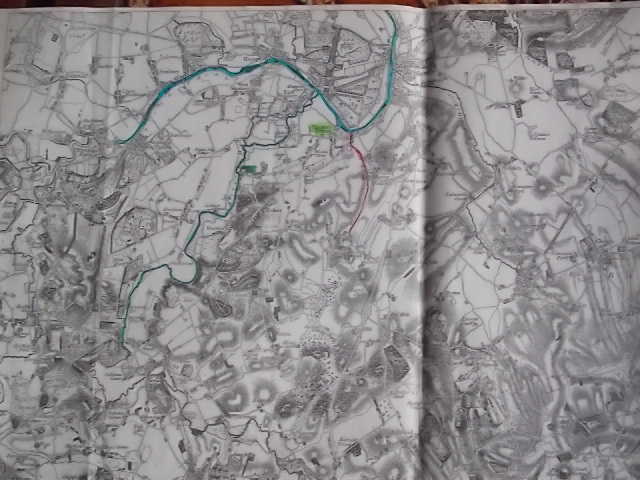
                                         Thames Ditton 1811.[4]


The means of raising and administering poor relief lay in the hands of the local parish and was overseen by the justices of the peace (JPs). The right to claim poor relief was dependant on the individual concerned being able to demonstrate a right to settlement in the parish from which relief was sought. Settlement examinations were undertaken by two justices and failure to prove settlement might to result in the issue of a removal order, removing a person (or family) to the parish deemed responsible for his or her upkeep.
 
 
‘We know very little about the activities of the vestries or the
justices out of sessions, but there is scarcely a hint of restraint.’[5]
 
 
Eighteenth-century JPs possessed extensive administrative and judicial powers in respect of the poor law: they appointed overseers of the poor, audited accounts, issued documents in connection with settlements, bastard children and pauper apprentices, and resolved disputes in these matters. While the practice in Thames Ditton was that most documents and accounts were signed by two JPs, many administrative functions appear to have been little more than rubber stamp procedures. They ensured that the law was enforced but do not appear to have questioned the day to day activities of the parish vestry and overseers of the poor in carrying out their statutory duties.[6]
 
 
Since the beginning of the seventeenth century, individual parishes had been able to raise money for poor relief by assessing those who held property within the parish boundaries for the poor rate, according to their ability to pay.[7] Most parishes, including Thames Ditton, used the rental value of a property as the basis for that assessment. The parish vestry and overseers of the poor were responsible for raising money and distributing relief, subject to the supervision of ratepayers assembled at vestry meetings. The parish vestry for Thames Ditton was not made up of a select committee; rather their meetings were open to all parishioners and attracted an average of ten attendees (all male) at any meeting. Although vestry meetings traditionally took place in the parish church, it was the practice in Thames Ditton to meet in one of the local inns, the church being quite small and the inns having the benefit of being able to provide refreshments. This was not unusual and allegations of drunkenness at vestry meetings were a matter of national concern.[8]

 
                                        The Swan, Thames Ditton


                                        The George, Thames Ditton


                                         The Red Lion, Thames Ditton


The keeping of vestry minutes in Thames Ditton was somewhat haphazard but, since vestry meetings were open to all parishioners, any issues could be aired directly at the parish meetings. The open vestry system operating in Thames Ditton may account for the limited instances of appeals against vestry decisions in the quarter session records, although a review of records for the King’s Bench (sitting as an appeal court) may provide contrary evidence. Nevertheless, in April 1739, the Thames Ditton vestry excused twenty-two residents from payment of the full rate assessed, following which there was an appeal to the Kingston justices, where a further fifteen were excused and two residents declared to have insufficient goods of any value to pay the rate.
 
Other concerns might be resolved within the parish, particularly if one of the more notable residents took an interest in the matter. When parishioners became concerned about the running of the local workhouse in October 1769, fifty-four of them attended a vestry meeting at which it was resolved that the overseers of the poor should take over the management of the workhouse from the existing workhouse master. Minutes of that meeting record that, the Right Hon. George Onslow, esq., ‘interposed’ in the matter, suggesting (for reasons of expense) that the workhouse master should not be dismissed until the end of his contract, which suggestion met with the agreement of the entire vestry.[9]
 
Signatures of attendees at vestry meetings provide evidence of the involvement of parishioners in parish business, their social status and levels of literacy of those administering relief. With few exceptions, the foremost residents of the parish do not otherwise appear to have taken part in day-to-day parish business, although Arthur Onslow, JP, signed various parish documents, such as the overseers’ accounts and removal orders.
 
 
An overseer of the poor was selected by the vestry, subject to the approval of the justices. He received no payment for his services, nor compensation for loss of earnings, yet was required to raise taxes and submit accounts to the vestry at the end of his year in office. Those who refused to undertake the task of overseer could be fined, though there is no evidence of such fines being levied in Thames Ditton. Overseers’ accounts for Thames Ditton are complete for the period 1723-1782.[10] Their accounts record the distribution of weekly pensions/allowances to the poor and made additional disbursements for clothes, shoes and the like. As demonstrated in Table 1, local business were used to supply goods and services to the workhouse, but there is no indication as to whether the vestry favoured local tradesmen at any price, over concerns for value for money, or whether members of the vestry were imposed upon to provide their services as cheaply as possible. Notes to the accounts include abstracts of charitable bequests benefiting the parish, although the indications are that the bequests were few and generally quite small. Therefore, the maintenance of the poor fell on parish ratepayers. Finally, the overseers’ accounts provide evidence of a rise in the cost of poor relief following the opening of a parish workhouse in 1760.


Table 1: Known occupations of men concerned in parish duties for Thames Ditton.


Name   
 
Occupation
 
Church
warden
Overseer
Other
Edward Griffin
attended meetings 1740-71
Blacksmith
 
1770
 
 
Robert Chandler
attended meetings 1742-81
 
 
Baker


1745/46, 1757/58, 1758/59,
1780
 
Edward Cooper
attended meetings 1768-85


Bricklayer


1775,
 1777,
1778
1769/70,
1776
Constable
1768/69
Surveyor
1772-85
Workhouse committee 1782
Edward Clarke
attended meetings 1773-85
 
 
Glazier


1777/78
1778/79,
1780
Surveyor
1772- 75
Workhouse committee 1782
Aaron Gale
attended meetings 1776-83
Carpenter
 
1784
 
Workhouse committee 1782
Wm Mears
attended meetings 1776-83
 
Carpenter


1784
Surveyor 1780
Workhouse committee 1782
John Hayman
attended meetings 1785
Retailer,
Pots and pans
 
 
Surveyor
1780-84
 
 
Poor rate books record the parish rate charged for each half year and the assessment made against all occupied houses and land in the parish.[11] They provide a valuable source for calculating the value of the land held in the parish, the economic standing of parishioners active in vestry business and evidence of those entitled to claim settlement through payment of the parish rate. The rate books also contain details of those persons who were too poor to pay or, having no certificate, were not assessed for rates in order to avoid establishing any right of settlement to those individuals.
 
 
Table 2 below demonstrates participation in parish business by a wide cross-section of the community. Records of parishioners active in parish business can also be found in the records of the general sessions, which include a register of names for the recorder, bailiffs, justices, jury, constables and headboroughs for the Hundred of Kingston upon Thames, which included Thames Ditton.[12]


Table 2: Rateable value of land holdings of Churchwardens and Overseers in Thames Ditton.


Name    
 
Value of property
Church-
warden
Overseer
John Danel
£11
 
1728
Philip Hart
£40
 
1728
Thomas Frances
£25
1730
 
John Goodgame
£4
1729, 1730
 
John King
£24
1732, 1743
1730, 1742
William Scott, senior
£12
1732
1730
Richard Restall
£12
1736
1735
Henry Stone
£12
 
1735,1736
John Perkings
 
£3 1730
£0 rated 1735
1740
1737, 1738
Thomas Fitzwater
£160
1740, 1755
 
James Spooner
£30
1740
 
John Wilsher
£30
 
1740
William Cockman
£5
1744, 1745
1743, 1770
John Brooks
£30
1755
 
Henry Stone
£20
 
1755
Charles Gardener
£3
 
1760
Richard Walmsley
£12
 
1760
Joseph King
£24
1760
1765
George Fielder
£4
1760
 
William Felton
£10
 
1765
Thomas Noyce
£4
1765
1743, 1770
William Holland
£7
1765
 
Matthew Mann
£6
1765
 
William Scott, jumior
£96
1785
1765
William Bedser
£10
 
1742, 1765
John Dean
£5
1770
 
Edward Griffin
£5
1770
 
Robert Chandler


£3     1745
£6     1775
 
1745/46, 1757/58, 1758/59,
1780
William Mears
£10
 
1784
Edward Cooper

 
£5
1775,
 1777,
1778
1769/70,
1776
Edward Clarke
 
£15
1777/78
1778/79,
1780
Aaron Gale
£5
1784
 
William Wood
£87
1775


One might question whether those appointed as overseers had sufficient levels of literacy and numeracy in order to carry out their duties. It is of course possible that a number of the men kept accounts in the course of their daily business and were also literate. The practice in Thames Ditton was for two overseers and two churchwardens to sign the rate books and accounts; in most instances, at least three of them were able to sign their own name. On one occasion in 1776 only the churchwarden, Edward Cooper, was able to sign his name. Thomas Henn, the other churchwarden, and William Scott and Philip Smith, the two overseers, were all unable to sign their names and one must question how the accounts were prepared and errors or fraud protected against in such circumstances. However, while William Scott and his son (who shared the same name) were unable to sign their names, both men took an active part in parish business and were successful in their own business of farming and renting out land (see Table 2).
 
 
Criticisms of the abilities of a vestry to administer the wide-ranging poor laws cannot be not fully justified. Parish vestries had a long history in managing the parish church, poor houses and alms-houses, administering charitable endowments, and assessing, collecting and distributing the poor rate. In the case of Thames Ditton, overseers’ accounts and poor rate books indicate that the work was undertaken both competently and diligently by the overseers of the poor and parish vestry.
 
 
Almshouses, Thames Ditton.


To come:

3.      The law of settlement and rights to relief.

4.      Outdoor Relief.

5.      The Workhouse.

6.      Attitudes to the Poor and Poor Relief.


If you have enjoyed reading this blog, please follow me using the link on right-hand panel.
 

[1] 9 Geo., I, c.7 (1723) For Amending the Laws relating to the Settlement, Imployment and Relief of the Poor.
[2] 22 Geo., III c.83 (1782) For the better Relief and Employment of the Poor.
[3] Oxley, Geoffrey W. (1974) Poor Relief in England and Wales 1601 – 1834 David & Charles:
  London , p.12.
[4] North Kingston Centre: (1811) O.S. (Old Series) one-inch map Sheet VIII. Engraved at the Drawing Room in the Tower of London and published 1st May 1816 by Colonel Mudge, Director of Trigonometrical Survey.
[5] Slack, Paul (1990) The English poor law, 1531-1782, Cambridge: Cambridge University Press, p. 20
[6] Landau, Norma (1984) The Justices of the Peace 1679-1760, Berkeley; London: University of California Press, pp., 21-28, 216-218.
[7] 43 Eliz., I c.2 (1601) The Poor Relief Act.
[8] Hindle, S. (2004) On the Parish? The Micro-Politics of Poor Relief in Rural England c.1550-1750,
  Clarendon Press: Oxford, p. 366.
[9] Surrey History Centre, Woking (SHCW) ref. 2568/7/3, Poor Rate Book.
[10] Surrey History Centre, Woking (SHCW) ref. 2568/8/1-4.
[11] SHCW ref. 2568/7/1-5.
[12] North Kingston History Room (NKHR) KE2/2/29-66.

Monday, 1 July 2013

The Old Poor Law, 1723-1782: Part 1, Thames Ditton, the Place and People.


                                    The Victorians did not invent the Workhouse

                                        The poor are always you: Matthew (26:11)

Vagrant being punished in the streets, woodcut c.1536.

Contrary to the impression given by the current ITV series ‘Secrets of the Workhouse’, the Victorian workhouse was not an original concept. Legislation for the relief of the poor in England and Wales dates back to 1536 when each parish was instructed to undertake voluntary weekly collections to assist the‘impotent’ poor. An Act of 1550 allowed parishes to open workhouses where the poor of the parish could be provided with food and accommodation in exchange for unpaid work.

Until 1834 the system of parish relief and provision of workhouses was determined on a parish by parish basis, where decisions regarding the raising of parish funds and distribution of poor relief were taken by parish officials at vestry meetings. The operation of the poor law in Thames Ditton in Surrey, 1723-1782, was the topic of my Masters dissertation some eight years ago and this blog in my opportunity to dust it off and incorporate some of the additional material I found along the way.

My plan over the next few weeks is to write a series of blogs that consider various aspects of the poor law during the Georgian period, as applied in the parish of Thames Ditton, under the following headings:

1.                  Thames Ditton: the Place and People.
2.                  Administration of the Old Poor Law.
3.                  The law of settlement and rights to relief.
4.                  Outdoor Relief.
5.                  The Workhouse.
6.                  Attitudes to the Poor and Poor Relief.

Parish records for eighteenth-century Thames Ditton can be found in Surrey History Centre, Woking (SHCW, collection ref. 2568).

1. Thames Ditton: the Place and People.

Thames Ditton was mentioned in the Domesday Book, when it included the manors of Claygate and Weston, while the parish church of St Nicholas dates back to the eleventh century.[1] By the eighteenth century Thames Ditton was a post town on the London to Portsmouth road and contained the two manors of Imworth and Claygate and the hamlets of Weston Green and Ditton Marsh. It stretched 2½ miles from north to south and 1½ miles east to west, bordering Kingston upon Thames and Long Ditton to the east, Cobham to the South, Esher and the river Mole to the east and the river Thames to the north.[2]


                                          Thames Ditton, 1690.[5]


The river Mole, which runs through the parish, has been mentioned in poems by Spenser, Drayton, Milton and Pope. It was said that by the time the river reached Thames Ditton it became less attractive as the course of the river followed a flat area of at marsh-land until it joined the Thames at East Molesey.[3] A series of naturally occurring underground caverns and passages created‘swallow’ holes, which made it appear that the river disappeared below ground then reappeared some distance away.[4]Those features are less evident today as a result of improved drainage.


The pub and the church.
                                         The Swan, Thames Ditton.[6]


The Swan Inn at Thames Ditton is situated beside the River Thames, just across the river from Hampton Court Palace. (Henry VIII was said to be a frequent visitor to the inn and, apparently, his seal of approval for the inn is held in the British Museum). The Swan, the George and the Red Lion inns on High Street and the Angel Inn on Giggs Hill, are mentioned in the parish rate books (1770–1785) as meeting places for parish business and are all still in business today as public houses.[7]

                                          St Nicholas Church, Thames Ditton.[8]


St Nicholas Church is quite small, which may explain why parish meetings took place in local inns rather than the church vestry. It is built of flint and stone and dates back to at least the early twelfth Century, with the addition of a tower in the thirteenth century, the North Arcade in the sixteenth century and the South aisle in the nineteenth century. Inside the church are a number of monuments and memorials to notable members of community.Memorials to the various ministers of the Church reveal a steady occupancy of the seat, in particular the Reverend George Harvest (1728-1789) who ‘zealously attended to the duties of this curacy for nearly 40 years’.The greater majority of the parish are likely to have attended St Nicholas Church. The Bishop’s return for 1725 noted that there was neither ‘papists’ in the parish nor any meetings of ‘protestant dissenters’ and, even then, the four families of dissenters ‘occasionally conform’. In 1788 the returns similarly record that there were still no papists and no meetings of dissenters.

Many families of significance made Thames Ditton their main or second home due to its proximity to Hampton Court, Claremont and Esher Place; the market and coach service in Kingston; and the rural aspect of the village.

                       Here lawyers, free from legal toils, And peers, released from duty,
                       Enjoy at once kind nature’s smiles, And eke the smiles of beauty:

                       ... Give me a punt, a rod, a line, A snug arm-chair to sit on,
                       Some well-iced punch, and weather fine, And let me fish at Ditton.[9]

Gentry of eighteenth-century Thames Ditton:[10]

Shem Bridges, esq., held the manor of Imworth from 1693 until his death in 1711, when he was succeeded by his nephew Henry Bridges, esq.
Henry Bridges settled the manor and estates of Imworth, which included Ember Court (otherwise Imber Court), on his niece, Ann Bridges (daughter and heiress of John Bridges, esq., also of Thames Ditton), on the occasion of her marriage to Arthur Onslow.
Arthur Onslow (1691–1768) made Ember Court his home and was variously JP, MP for Surrey, and Speaker of the House (1728-1761) and upon his death, he was succeeded by his son George Onslow.
George Onslow, 1st Earl of Onslow (1731–1814) MP for Surrey, lord lieutenant and custos rotulorum for the county.[11] When George Onslow sold the manor in 1784 to George Porter esq., it was described as comprising ‘a capital mansion, other houses, and about three hundred and twenty five acres of land, all tithe free.’[12]
Lord Henry FitzGerald (1761–1829) lived at Boyle Farm.
Colonel Sidney Godolphin (1652–1732) MP and‘Father of the House’.
Sir Richard Joseph Sullivan, bart, MP (died 1806) lived in Ditton House which stands on High Street along-side The Swan Inn.[13]
Cesar Picton (1755-1836) brought to England from Africa as a slave and in 1761 presented as a servant to Sir John Phillips, bart, of Norbiton, Surrey. He later became a businessman and owned the wharf and a malt house in Thames Ditton.[14]

                                            Ember Court, 1776.[15]


The Manor of Claygate was held by the Evelyn family at the end of the seventeenth century when it passed to Henry Byne, esq. It was bought by Lord Chancellor King in 1727 and was held by the same family for the remainder of the century.[16]

The demography of the parish during the eighteenth century can be assessed by an examination of the hearth tax returns, 1664,[17] the Bishops Visitation, 1725 and 1788, the 1801 Census, and parish rate books. The hearth tax returns for 1664 recorded a population of about 715 in 150 houses (assuming a factor of 4.75 per family unit based on family sizes recorded for the parish in 1801). The visitation of 1725 records 200 families in the parish, which (using the same factor) would give a population of 950. A population of 900 was recorded in the visitation records for 1788, indicating that population levels were either falling or fairly stagnant. Joan Thirsk observed that population growth in England over the period 1640-1750 was only moderate and any growth uneven, with periods of stagnation if not actual decline in the middle decades of the century, which appears to have been the case in Thames Ditton.[18] The census of 1801 recorded a population of 1,288 for the parish, constituted in 270 families, living in 265 houses, i.e., about 4.75 persons per family.

The same records provide evidence of the social structure of the parish. The hearth tax returns for 1664 record that, of 150 properties, 100 hundred houses (66.7 per cent) had one or two hearths. Sixty-eight people were exempt from charges as being too poor to pay, and they are likely to have been occupants of the sixty-three houses with only one hearth, with the remainder living in those with two hearths. At the other extreme, fifteen houses were recorded as having between five and nine hearths while four households had in excess of ten. The rate books for November 1755 indicate a similar social balance in that out of the 200 families living in the parish, approximately 130 families occupied houses with a rent value of less than £5 per annum (65.0 per cent, additional land holding outside the parish not included), while thirteen households occupied properties valued in excess of£50 per annum.

Thames Ditton was mainly an agricultural community with some rural crafts and trades. A guide to the occupations of the general population during the eighteenth-century can be found in the 1801 census, which recorded 167 people chiefly employed in agriculture and 87 in trade, manufacture or handicrafts.[19] The rate books for the eighteenth century make reference to a number of farms, orchards, woods and kitchen gardens and to various parishioners occupying meadows and woodland belonging to the Onslow family, Lord King and the Bishop.

Other evidence of trades undertaken within the parish can be found from an examination of the overseers’ accounts. Their accounts record the payment of bills to various residents for the manufacture or provision of bread, food, shoes and clothing for the poor. Further entries include payments for work undertaken by local ratepayers, employed as carpenters, bricklayers, plumbers, blacksmith, or tradesmen providing coal, ironmongery and other goods to the parish workhouse. Only a few poor apprentices were placed within the parish, therefore, little information can be abstracted from apprenticeship records on local trades other than the presence of a blacksmith, watermen, fishermen and farmers.

The first records of Ember Mill appear in the early 1600’s. Using water power from the river Thames it was originally used for grinding corn and converted to a metal/lead works in the middle of the seventeenth century. In 1638 it was adapted for the manufacture of brass and iron wire.[20]The rate books for 1760 refer to the melting house’ or ‘smelting house’at Ember Mills and it is marked on Cary’s map of 1786 as ‘Iron Wire Mills’.[21] Overall, the records for Thames Ditton fit Thirsk’s description of life in England between 1640 and 1750, with ‘slow population growth, cheap and adequate food supplies, and proliferating employment in specialized agriculture, in horticulture, and in industries and servicing trade’.[22]

If you have enjoyed reading this blog, please follow me using the link on right-hand panel.


[2] Hall, Mr and Mrs. S.C. (1859) The Book of the Thames, republished (1975) Robert A. Harris London: Charlotte James, p. 316; Allen, Thomas (1830) A new and complete history of Surrey and Sussex, London: I.T. Hinton, pp. 462-463.
[3] Brayley,History of Surrey, vol. 1, p. 171; and Hall, The Book of the Thames, p. 315
[4] Allen, Thomas (1829) History of Surrey and Sussex London: I.T. Hinton pp. 66-68; Briggs, Martin (1949) Down The Thames, London; Herbert Jenkins, pp. 155-156.
[5] North Kingston Centre, History Room: The Mapping of Surrey 1597-1823. John Seller, Surrey (1690). Engraved by John Oliver and Richard Palmer with ‘many additions’ by Philip Lea, c. 1693.
[6] The Swan Hotel, Thames Ditton, 1928, SHCW ref. 7828/2/52/10, Photographic Record and Survey of Surrey, no. 9203, http://www.exploringsurreyspast.org.uk/themes/places/surrey/elmbridge/thames_ditton/, accessed 30 June 2013.
[7] SHCW ref. 2568/7/4.
[8] St Nicholas Church, c.1913, http://www.edlhs.co.uk/Thames%20Ditton%20and%20Long%20Ditton%20Local%20Photos.html, accessed 30 June 2013.
[9] Hook, Theodore (1834) ‘The Swan Inn, Ditton’, http://en.wikipedia.org/wiki/Thames_Ditton, accessed 27 June 2013.
[10]Brayley, History of Surrey, vol., 1.
[11] Custos rotulorum ,the principal Justice of the Peace responsible for the safe guarding quarter sessions records.
[12] Brayley,History of Surrey, vol., 1, pp. 415-416.
[13]Brayley, History of Surrey, vol., 1, p. 424.
[14] A Full History of Picton, http://www.kingston.gov.uk/cesar_picton_s_story_pdf.pdf, accessed, 30 June 2013.
[15] Ember Court, by Sandby& amp; Rooker (1776) The Seat of Sir Thomas Wilson at Charlton from Sandby’s Rural England (1775-8), a copperplate engraving of an English scene, after a printing by P. Sandby, R.A. Printed for G. Kearsly, Fleet Street, London.
[16] Brayley,History of Surrey, vol., 1, p. 416.
[17]Meekings, C.A.F. (editor) (1940) Surrey Hearth Tax, 1664, Surrey: Surrey Record Society p. ci.
[18] Thirsk, J. (editor) (1985) The Agrarian History of England and Wales, vol. V, part II (1640-1750), Cambridge: Cambridge University Press, p.3; Flinn, M. W. (1976) British Population Growth 1700 - 1850 London: Macmillan Press, p. 26.
[19]Manning, Rev. O., & W. Bray The History and Antiquities of the County of Surrey, vol. III, p. 25.
[20] Molesey Mills, A History of the Mills and Milling,http://www.moleseyhistorysociety.org/Molesey%20Mills.pdf,accessed, 30 June 2013.
[21] Cary, J., (1786) Fifteen Miles Round London.
[22] Thirsk,The Agrarian History, vol. V, part II, p. 138.